
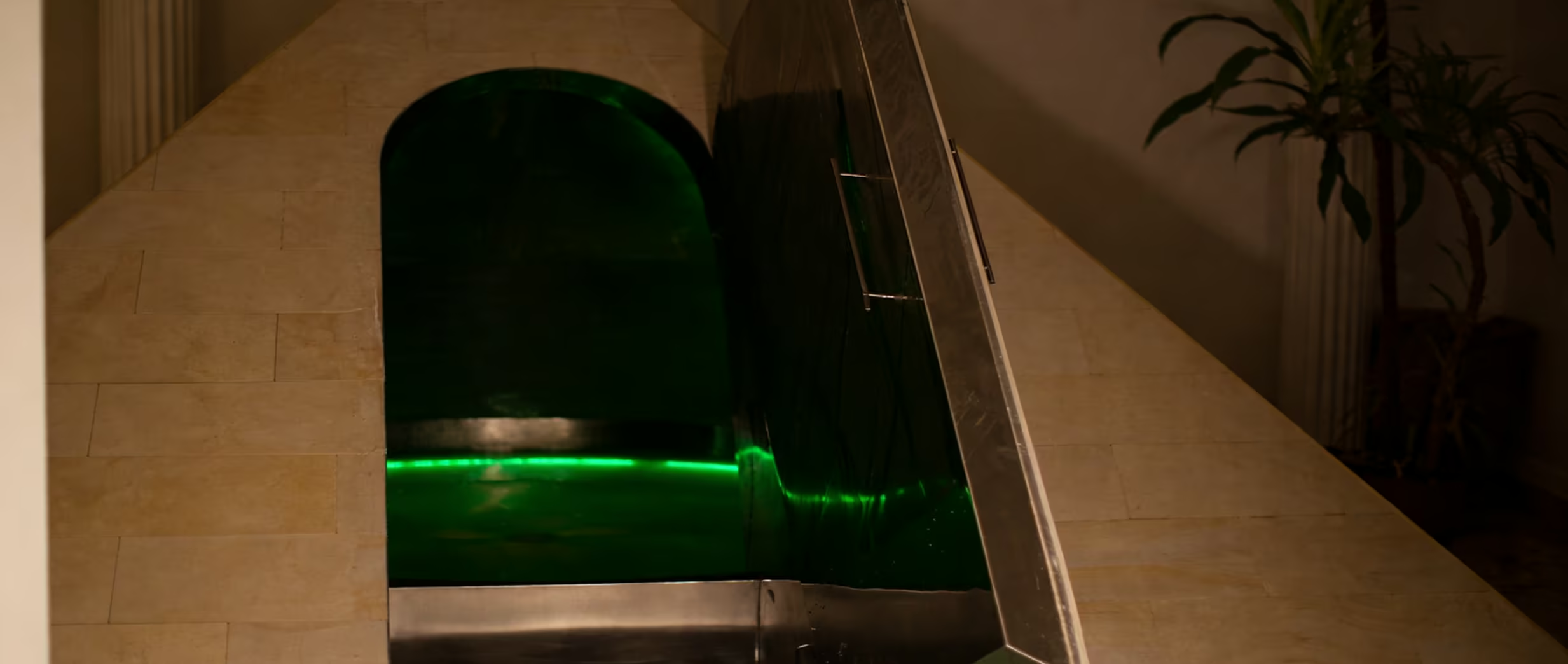
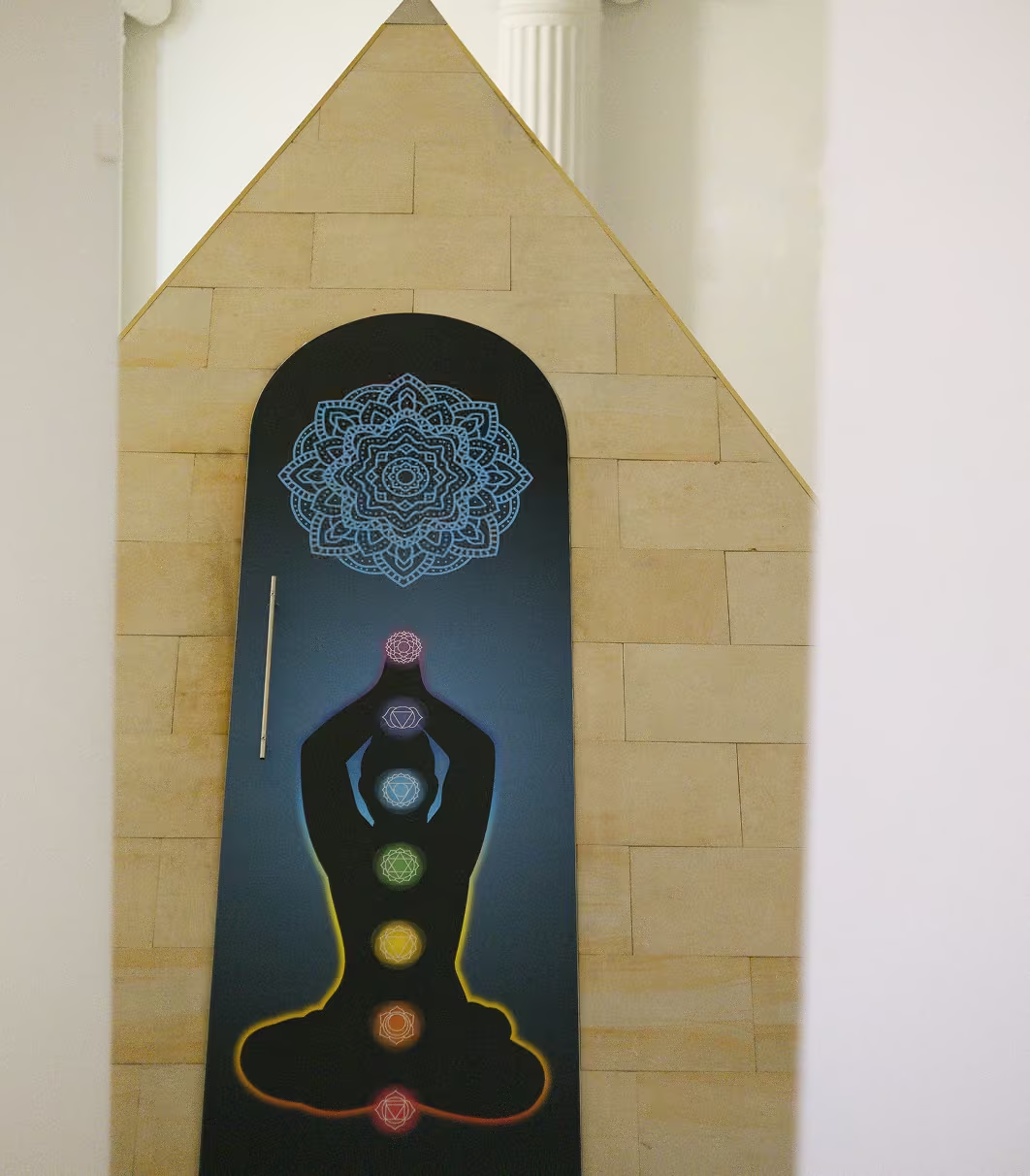
Floating has a very interesting history. And what is most fascinating is that it did not begin as a pleasant spa treatment at all, but as a rather bold scientific experiment. The story is so unusual that at times it feels like it could make a great film.
How it all began
In the 1950s, American neurophysiologist John Lilly became interested in a rather unusual question: what would happen to the human brain if almost all external stimuli were removed? He wanted to understand how consciousness behaves in a situation where light, sound, the sensation of temperature, and even the feeling of the body’s own weight disappear.
In other words, the researcher wanted to see what happens to the brain when it is, in effect, left alone with itself.
To test this idea, he created the first sensory deprivation chamber. By modern standards, it looked rather strange: a large enclosed tank filled with warm, highly salted water. The water temperature was adjusted to almost match the temperature of human skin, and all light and sound were completely eliminated inside. Under such conditions, a person lost most of the usual signals coming from the outside world, and the brain entered a state of almost complete sensory silence.
And that is when the most interesting part began
The results of these experiments turned out to be much more interesting than expected. Many people entered a state of deep relaxation quite quickly, a state that felt like several hours of полноценного rest or meditation. Some participants noted mental clarity, the appearance of new ideas, and a sense of inner “reset.”
In other words, when the noise of the outside world disappeared, the nervous system suddenly gained the ability to recover much faster.
But the first chambers were, to put it mildly, extreme
The first sensory chamber designs looked quite radical. A person was effectively underwater and had to breathe through a special mask, so for most people it felt more like a laboratory experiment than relaxation. It is no surprise that this technology did not become widespread at the time. After all, not everyone is ready to relax in a device that looks as though it has just been brought in from a space laboratory.
How floating became a spa treatment
Only in the 1970s and 1980s was the technology significantly redesigned. The chambers became more spacious and safer, and the very principle of staying in the water was rethought. A person no longer went underwater — instead, they floated on the surface of a highly concentrated salt solution.
Large amounts of Epsom salt, a magnesium salt, began to be added to the water, making the solution so dense that the body could stay afloat effortlessly on its own. Under these conditions, the muscles relax completely, while the spine and joints essentially get a rest from gravity.
It was only after this that floating began to be used not only in scientific laboratories, but also in recovery centers, meditation studios, wellness spaces, and spa centers.
Interesting fact
A standard float tank contains approximately 500 to 600 kilograms of salt dissolved in the water. This concentration creates such a dense solution that a person literally lies on the surface of the water without tensing a single muscle or even thinking about body position.
Another fact that often surprises people
After about 15 to 20 minutes in a float tank, the brain often shifts into so-called alpha and theta waves. These are the same states associated with deep meditation, the moments before falling asleep, or creative insights, when thinking becomes calmer and more integrated.
Another fact I personally love
When a person has been floating for about 15 to 20 minutes, the brain begins to shift into alpha and theta waves.
These are the very same brainwave states that occur:
— during deep meditation
— before falling asleep
— during creative insights
In other words, floating is something like a shortcut to a state that yogis spend years training to reach.
In a world where the nervous system is constantly overloaded with stimulation and information, this kind of silence and calm for the brain can sometimes become a true luxury.